A Buyer’s Guide to Sourcing Botanical Pesticide Materials: Bulk Allicin Powder Supply Chain Insights
The demand for plant-derived pesticides is growing as formulators, agronomists, and regenerative agriculture projects seek alternatives to synthetic active ingredients. Allicin, with its defensive and antibacterial properties, has become one of the most extensively studied natural compounds. However, procuring bulk allicin powder is not as simple as placing a purchase order. You may face issues such as batch-to-batch inconsistencies and supply chain opacity.
This guide will lead purchasing managers, product formulators, and procurement leaders through the realities of large-scale allicin powder procurement—what allicin powder is, how the supply chain operates, which specifications are truly important, how to assess a manufacturer’s qualifications, and how to avoid costly mistakes that can lead to the initial failure of a plant-derived pesticide project.
What Is Allicin and Why It Works in Pest Control
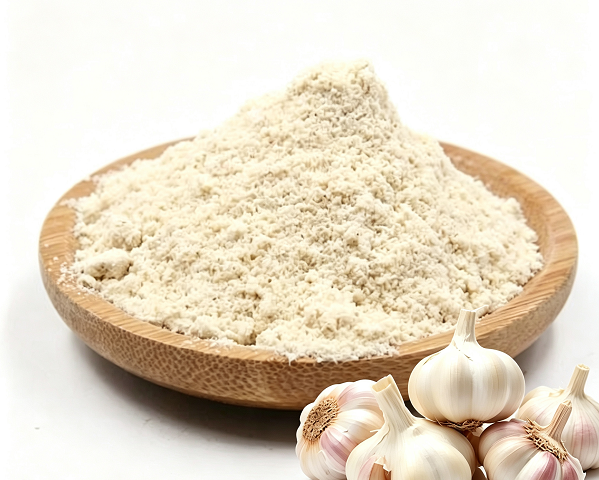
Allicin is the principal bioactive compound formed when garlic (Allium sativum) is crushed or processed and its enzyme alliinase converts the precursor alliin into allicin. In nature, it is part of the plant’s defense system against microbes, fungi, and pests. In formulated botanical products, that same mechanism is what makes it interesting as a low-toxicity, naturally derived pest-management input.
Two facts matter for you:
- Allicin is unstable by nature. In raw garlic it degrades quickly. Stabilized, standardized powder formats are what make commercial formulation possible.
- Potency is a spec, not a given. “Allicin powder” with no stated assay tells you almost nothing. The allicin equivalence percentage is the single most important number on a certificate of analysis (COA).
Rule of thumb: never compare allicin powder suppliers on price per kilogram alone. Compare on standardized allicin assay per dollar, because that is what drives efficacy in the field.
The Shift Toward Botanical Pesticide Materials
Several forces are pushing formulators toward botanical actives like allicin:
- Regulatory pressure on synthetic residues in food and export markets.
- Resistance management — rotating modes of action to slow pest resistance.
- Consumer and retailer demand for “clean label” and residue-free produce.
- Organic and regenerative certification programs that restrict synthetic inputs.
For a sourcing lead, the implication is strategic: botanical inputs are no longer a niche. They are becoming a structural component of mainstream crop-protection portfolios, which means supply reliability and specification discipline now matter as much as they do for any synthetic active.
How the Bulk Allicin Powder Supply Chain Works
Understanding the chain helps you pinpoint where quality — and risk — is created. A typical bulk allicin powder supply chain looks like this:
Step 1 — Raw Garlic Sourcing
Quality starts in the field. Garlic cultivar, growing region, soil health, and harvest timing all influence the alliin (precursor) content that eventually becomes allicin. Reputable manufacturers trace raw material to specific growing regions and lots.
Step 2 — Extraction & Stabilization
Mechanical crushing triggers allicin formation, but the compound is volatile. The manufacturer’s process — drying method, temperature control, encapsulation or powder matrix — determines how much allicin survives and stays bioavailable in the final powder. This is where most suppliers differentiate, and where most quality gaps appear.
Step 3 — Standardization & Assay
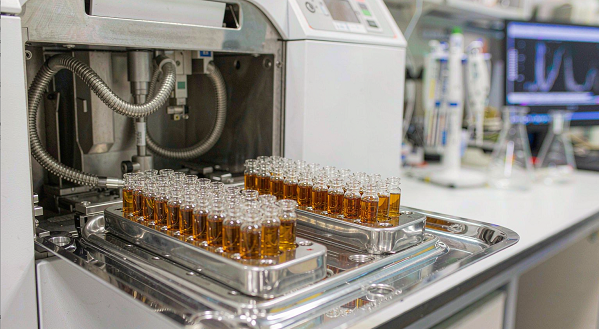
The powder is tested and adjusted to a target allicin equivalence (commonly 1%–25%). Standardization is what lets a formulator calculate dose accurately across batches.
Step 4 — Packaging, Shelf Life & Logistics
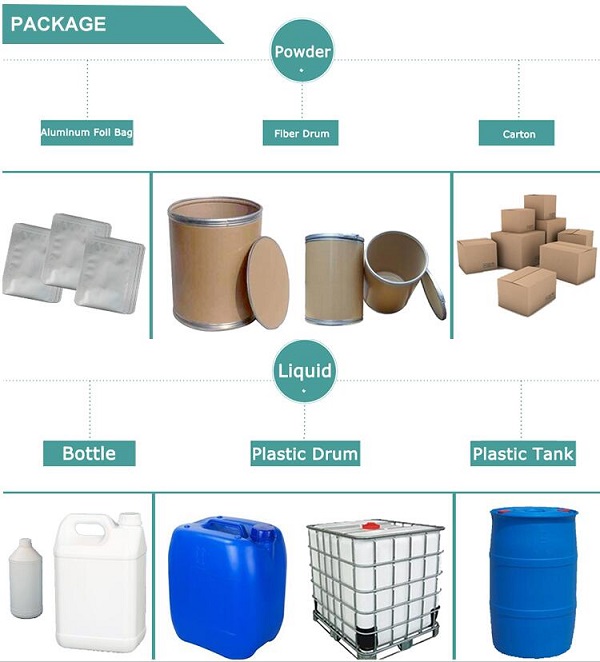
Allicin is sensitive to heat, light, and moisture. Proper sealed, low-moisture packaging plus controlled storage is essential to preserve potency through transit and warehouse life.
Supply Chain Red Flag
If a supplier cannot tell you how allicin is stabilized or will not share batch-level COAs with assay data, treat that as a disqualifying gap. Opaque process = unpredictable product.
Quality Specifications You Must Demand
When requesting a quote, your specification sheet should be explicit. The table below lists the specs that separate a formulator-grade botanical input from a generic powder.
| Specification | Why It Matters | Typical Expectation |
|---|---|---|
| Allicin assay (allicin equivalence) | Drives field efficacy and dosing math | 10%–25% for pesticide-grade; lower for blends |
| Moisture content | High moisture accelerates degradation | ≤ 8% (verify on COA) |
| Heavy metals (Pb, As, Cd, Hg) | Regulatory compliance | Within market-specific |
| Microbial limits (TPC, yeast, mold) | Storage stability and safety | Within thresholds |
| Particle size / solubility | Affects mixability in formulations | Agreed mesh or D90 specification |
| Shelf life & storage conditions | Potency retention through the chain | Documented, with stability data |
Always request a third-party or in-house COA per batch, not just a generic product sheet. For pesticide-grade use, consistent assay across batches is more valuable than a single impressive number.
How to Qualify an Allicin Powder Manufacturer
A manufacturer’s answers to the questions below reveal whether they can support a serious botanical pesticide program. Use this as your qualification checklist:
Questions to ask
- What is your standardized allicin assay range, and can you hold it batch to batch?
- Do you provide a COA for every lot, with assay, heavy metals, and microbials?
- What certifications do you hold?
- Can you share stability data showing potency retention over shelf life?
- What is your typical lead time and minimum order quantity (MOQ)?
- Do you offer formulation or application technical support?
Red flags
- Vague or missing allicin assay on quotes.
- No batch-level COA, only a brochure spec.
- Refusal to share samples for your own lab verification.
- Price that is dramatically below market with no explanation.
- No traceability to raw garlic origin.
Pricing Factors in Bulk Procurement
Allicin powder pricing is driven by several interdependent factors. Understanding them helps you negotiate and forecast:
| Factor | Effect on Price |
|---|---|
| Allicin assay strength | Higher standardized assay = higher cost per kg, but often lower cost per unit of active |
| Order volume / MOQ | Larger, contracted volumes typically earn tiered discounts |
| Certifications required | Certifications add compliance and audit cost |
| Raw garlic market | Harvest yield and region affect base material cost |
| Packaging & logistics | Climate-controlled or export-grade packaging adds cost |
| Testing & documentation | Full third-party COA programs carry a small premium |
The smart buyer calculates cost per unit of active allicin, not cost per kilogram. A cheaper low-potency powder often requires more material per hectare, eroding the apparent savings and risking inconsistent field results.
Regulatory & Compliance Considerations
Botanical pesticide materials sit inside a regulated space, and the rules differ by market:
- United States: Garlic-derived actives may fall under EPA biopesticide frameworks; confirm the registration or exemption status for your intended use.
- European Union: Plant protection products require authorization under Regulation (EC) No 1107/2009; botanical status alone does not grant free use.
- Organic programs: Both USDA Organic and EU Organic have input lists — verify the specific allicin product is permitted for your certification scheme.
- Residue & MRL context: Botanical does not mean unregulated; document everything for audit trails.
Your supplier’s documentation is part of your compliance file. Choose a manufacturer that treats COAs, specifications, and origin traceability as standard deliverables, not special requests.
Building a Resilient Supply Chain
Botanical supply is exposed to agriculture’s volatility — weather, harvest cycles, and regional concentration. Mitigate with these practices:
- Dual-source critical inputs where possible, even if one is primary.
- Contract volumes seasonally aligned to garlic harvest windows.
- Keep stability-validated safety stock to ride out transit or assay delays.
- Agree on assay tolerance bands in writing to avoid rejected batches.
- Build a technical relationship, not just a transactional one — formulation support prevents costly rework.
Why Buyers Source Bulk Allicin Powder from Green Agri
At Green Agri, we manufacture bulk allicin powder for botanical pesticide and crop-protection formulators 20 years. Our approach is built around the specifications this guide says matter:
- Standardized assay with batch-level COAs covering allicin content, heavy metals, microbials, and residual solvents.
- Traceable raw material sourced from contracted garlic-growing regions.
- Certifications ISO 9001
- Stability-validated shelf life and export-grade packaging.
- Technical support for formulation, dosing, and regulatory documentation.
Whether you are prototyping a new botanical pesticide or scaling an existing line, we help you de-risk the allicin portion of your supply chain.
Request a Bulk Allicin Powder Quotation
Tell us your target allicin assay, volume, and market, and we’ll return a specification sheet, sample COA, and lead-time estimate. Get a Quote from Green Agri
Frequently Asked Questions
What is the typical allicin potency in bulk allicin powder?
Commercial bulk allicin powder is typically standardized to 1%–25% allicin equivalence depending on the extraction and stabilization process.
Is allicin powder safe and compliant as a botanical pesticide input?
Allicin is a naturally occurring compound derived from garlic (Allium sativum) and is generally recognized as a low-toxicity botanical active. Compliance depends on your target market — in the U.S. it may be regulated under EPA biopesticide frameworks, while the EU has its own authorization process.
How should bulk allicin powder be stored and shipped?
Allicin is sensitive to heat, light, and moisture. Store in sealed, low-moisture containers away from direct sunlight at controlled room temperature, and use desiccants where needed. For long-haul or tropical shipping, consider climate-controlled logistics to preserve potency and shelf life.
How do I compare allicin powder suppliers fairly?
Compare on standardized allicin assay (not just price per kg), COA transparency, batch-to-batch consistency, lead times, minimum order quantity, certifications, and technical support. A low price on a low-potency or inconsistent batch usually costs more in reformulation and failed efficacy trials.
Sourcing botanical pesticide materials well is a discipline, not a transaction. If you’re evaluating an bulk allicin powder supplier for your next formulation, contact us for specifications, samples, and supply-chain support.
Related Allicin Sources
Environmental Safety Profile of Allicin: Soil Degradation, Ecotoxicity, and Non-Target Organisms
How to Combine Allicin with Other Botanical Pesticides for Maximum Synergy
Allicin for Soil-Borne Pathogens: Controlling Fusarium and Root-Knot Nematodes Naturally
Allicin Stability in Water: Challenges and Solutions for Agricultural Formulations
Allicin vs Ethylicin in Agriculture: Key Differences in Mechanism and Performance
Case Study: Allicin in Organic Pest Control Solutions