Rotenone in Aquaculture: Pond Clearing for Shrimp and Crab Farms
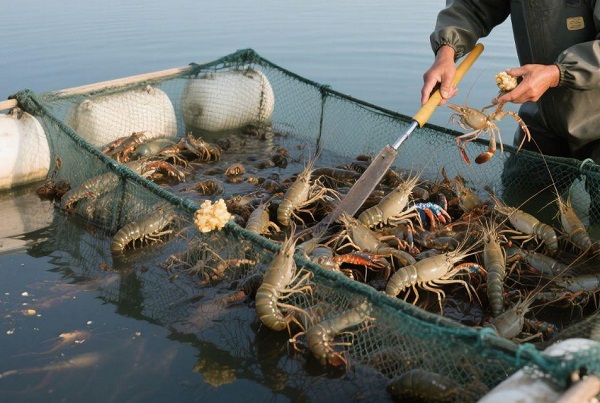
Wild fish are one of the hidden costs on a shrimp or crab farm. They steal feed, eat young shrimp, use up oxygen, and carry disease into a clean pond. Most farmers notice the damage too late, after a month of feeding, when the feed bill is high and the harvest count is low.
Pond clearing fixes that problem before it starts. In many regions, rotenone is still one of the most common tools for the job. This guide explains what rotenone is, how it works, how much to use, when to apply it, and what can go wrong.
Read your product label first. Laws on rotenone are different in every country, and a few countries have banned it. Nothing in this article replaces the label.
What Is Rotenone?
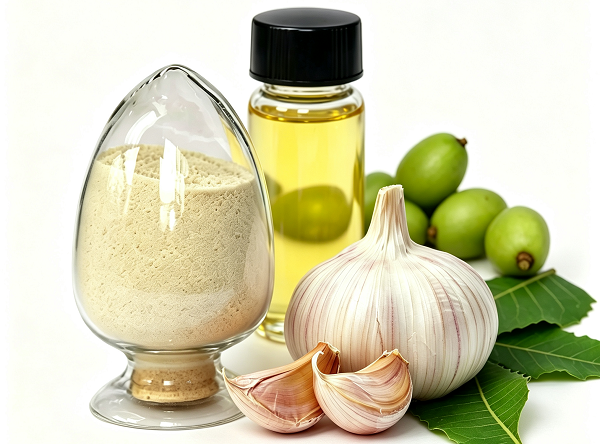
Rotenone is a natural compound that comes from the roots of a few plants in the pea family, mainly Derris, Lonchocarpus and Tephrosia. People have used these roots to catch fish for hundreds of years, and today rotenone is sold as an insecticide and as a piscicide. A piscicide is simply a chemical that kills fish.
Two things make it useful on a farm. It is a plant extract rather than a lab-made poison, and it breaks down quickly once it is in the water. That short life is exactly what you want when you need a clean pond and a short wait before stocking.
How Does Rotenone Kill Fish?
Every animal cell needs energy, and cells make that energy inside tiny parts called mitochondria. Rotenone blocks one step in that process, so it works a bit like cutting a fuel line. The fish still has oxygen in the water around it, but its cells can no longer use that oxygen to make energy.
Fish take rotenone in through their gills, and the blood carries it through the rest of the body. The fish runs out of energy, stops moving, and dies. In a pond treatment this happens fast, usually within minutes to a few hours. Research shows that many fish die at levels below 1 part per million (Ling, 2003).
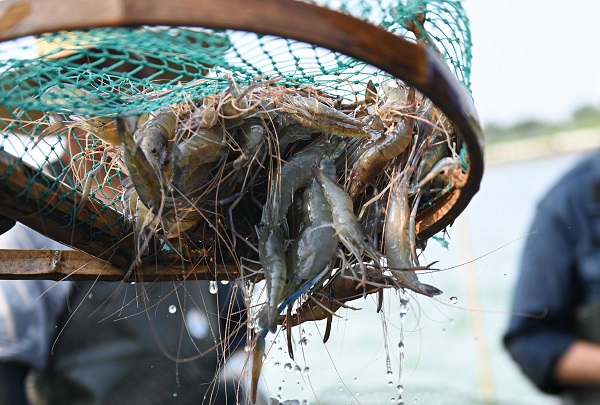
The useful part for a farmer is what happens next. Shrimp, crabs and shellfish handle rotenone far better than fish do.
Why Do Shrimp and Crab Farms Use Rotenone?
Farmers also keep using rotenone for a few other reasons:
- It clears the pond, so wild fish, loaches and eels stop competing for feed.
- It knocks back zooplankton, because water fleas and copepods can bloom and then crash, which pulls oxygen out of the water fast.
- It cuts the parasite load on the animals you are about to stock.
- It is mild on pond weeds, which matters in crab ponds with a lot of grass.
- It leaves no long-term residue when the water is warm and sunny.
You can clear the wild fish out of a pond and still stock shrimp about a week later, which is the whole point. Be clear about one thing though: “less sensitive” does not mean “safe.” If you overdose, you will kill your shrimp too, so always treat the pond before you stock and never after.
How Much Rotenone Should You Use?
Dose by water volume rather than by pond area alone, so measure your depth before you mix anything.
| Job | Product | Per 1,000 m³ of water | Per hectare at 1 m depth |
|---|---|---|---|
| Clear wild fish | 4% rotenone EC (emulsifiable concentrate) | 1.5 L | 15 L |
| Clear wild fish | 6–7% rotenone root powder | 2.2–3.0 kg | 22–30 kg |
| Control zooplankton | 4% rotenone microemulsion | 0.3–0.45 L | 3.0–4.5 L |
| Treat external parasites | 4% rotenone microemulsion | 0.45–0.60 L | 4.5–6.0 L |
Two notes from the field are worth remembering. Ponds carrying a heavy load of wild fish may need 10–20% more, and root powder should be soaked in warm water before use because dry powder does not disperse well.
These figures come from common practice on Asian shrimp and crab farms. Your local label is still the final word.
When Is the Best Time to Apply Rotenone?
Timing changes the result more than most farmers expect, so follow these rules. Treat 7 to 15 days before stocking, which gives the chemical time to break down. Pick a sunny morning, because light helps break rotenone down even though hard midday sun destroys it too fast, so avoid the window from 10 a.m. to 3 p.m.
Never treat on a rainy day, since rain dilutes the dose and the treatment fails. Run your aerators for two to four hours afterwards, because dead plankton rot and rotting pulls oxygen out of the water. And skip the molting peak, because soft-shell shrimp and crabs are weak and stress easily.
Finally, remember that rotenone breaks down faster in alkaline water. Do not spread lime or bleaching powder at the same time.
How Long Does Rotenone Last in Water?
Not long. Heat, sunlight and oxygen all break it down, and that is one of its best features. Here is what the research found (Ling, 2003):
- In water above 20°C, the half-life is usually less than one day.
- Rotenone disappears about 10 times faster at 23°C than at 1°C.
- It falls below detection within 3 days at 15–22°C.
- At 8°C, it can take up to 14 days.
On your farm, that means a week is often enough in hot weather, while cool weather needs longer. Do not guess, because there is a cheap test that settles the question. Put a few shrimp in a cage in the pond for 24 hours and watch them.
If they stay active and eat, you are ready to stock. If they go quiet or sit on the bottom, wait another two days and test again.
What Can You Mix With Rotenone?
One common partner is tea seed cake. Rotenone kills wild fish and tea seed cake kills snails and mussels, so used together they clean a pond more completely, and both products come from plants. To use it, soak 22–30 kg of crushed tea seed cake per 1,000 m³ of water for 12 hours, then mix it with your diluted rotenone and spread it over the whole pond.
Never mix rotenone with the products below.
| Do not mix with | Why |
|---|---|
| Lime, bleaching powder, caustic soda | Alkaline products destroy rotenone quickly |
| Potassium permanganate, chlorine dioxide | Strong oxidizers break it down and add stress to stock |
| Pyrethroid or organophosphate insecticides | The toxicity stacks and can wipe out your animals |
Keep every partner product separate in time, and never pour two chemicals into the same bucket.
Safety Rules for Your Crew
Rotenone is moderately toxic to people, so treat it with respect. Anyone handling it should wear chemical-resistant gloves, goggles, boots, long sleeves and a mask while mixing, and nobody should eat, drink or smoke during the job.
If it touches skin, wash the area with running water for 15 minutes. If it gets into the eyes, flush them for 10 to 15 minutes and then see a doctor. There is no antidote, so if someone swallows it, go straight to a hospital and bring the product label with you. Store the product sealed, cool and dark, because heat and light will ruin even a good batch.
Why be so strict? Lab studies have linked long-term, high-dose rotenone exposure to nerve damage in rats (Betarbet et al., 2000). Short-term field use with full protective gear is a very different thing, but those studies are the reason the gear is not optional. In its 2007 review, the US EPA kept rotenone registered only with the protections written on the label (U.S. EPA, 2007), and that is a sensible rule everywhere.
What to Do If You Used Too Much
Act fast, because every hour counts. Turn on every aerator you own and add a peroxide-based oxygen product at 1.5–2.2 kg per 1,000 m³ of water. Then pump out 30–50% of the pond water and refill with fresh, aerated water, keeping the temperature gap under 2°C.
In shrimp and crab ponds, sodium thiosulfate at 3.0–4.5 kg per 1,000 m³ helps bind whatever is left. Keep aerating for three full days, and then run the cage test before you stock a single animal.
Expect the water to cloud and the pH to drop, because dead plankton are breaking down. Do not restock until the water clears and the cage test passes.
Check the Law Before You Buy
Rotenone is not legal everywhere, so do your homework first. In the United States, the EPA kept rotenone registered in 2007, but only for a short list of uses, and most of those are fish management jobs run by trained agencies (U.S. EPA, 2007). The EU and UK do not approve rotenone for general crop use.
Before you place an order, check three things. Is rotenone registered in the country where you will use it? What uses are printed on the label? And what waiting period does the label require before stocking?
What Buyers Should Look For in Rotenone Raw Material
This part is for formulators, distributors and procurement teams.
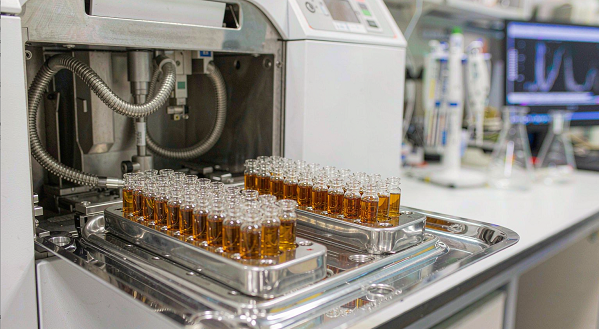
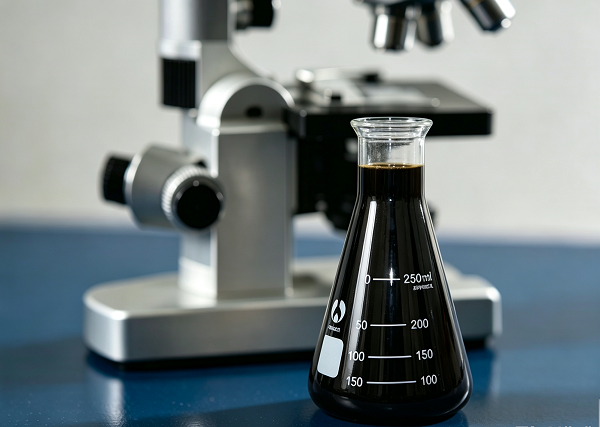
You can request that your rotenone raw material supplier provide actual assay values—rather than vague “purity” claims—and ask which testing method is used.
Then ask for stability and storage data, since rotenone degrades with heat and light, and request a full document pack with a Certificate of Analysis, an MSDS, a spec sheet and batch records.
Rotenone is a strong tool, but it is a fussy one. Buy from a supplier who ships in sealed, light-proof drums and can show you records for every batch.
Related reading:
– Rotenone Raw Material Specifications: A Guide for Pesticide Formulators
– How to Test Rotenone Purity and Active Content Before Formulation
Frequently Asked Questions
Is rotenone safe for shrimp?
Shrimp are far less sensitive to rotenone than fish are, but you should never treat a pond that already holds shrimp. Treat before stocking, respect the waiting period, and then run the cage test.
How long should I wait before stocking?
Seven to fifteen days is common, with warm water needing less time and cold water needing more. Let the cage test decide rather than the calendar.
Can I use rotenone in a pond with fish I want to keep?
No. Rotenone kills fish, because that is its job, so only use it where fish are the target.
Does rotenone kill snails and mussels?
Not well on its own, which is why tea seed cake is the usual partner for that job.
Why did my rotenone stop working?
The most likely causes are heat, sunlight, alkaline water or poor storage, so check whether anything alkaline went into the pond at the same time.
Can I use rotenone in a pond full of weeds?
Usually yes, because it is mild on aquatic plants, but heavy weed beds can soak up the chemical, so dose by water volume rather than by area.
Talk to Our Team About Rotenone Supply
Green Agri has made botanical pesticides since 2004, and we supply rotenone technical material and liquid powder to formulators and distributors worldwide.
We provide complete documentation, including COAs, MSDSs, and production flowcharts, and can supply free samples for your testing needs.
Tell us your target formulation and your market, and we will match the grade and the documents to your registration needs.
Send an inquiry — most requests get a reply within one business day.
References
Betarbet, R., Sherer, T. B., MacKenzie, G., Garcia-Osuna, M., Panov, A. V., & Greenamyre, J. T. (2000). Chronic systemic pesticide exposure reproduces features of Parkinson’s disease. Nature Neuroscience, 3(12), 1301–1306.
Finlayson, B. J., Schnick, R. A., Cailteux, R., DeMong, L., Horton, W., McClay, W., Tichacek, G. J., & Thompson, C. (2000). Rotenone use in fisheries management: Administrative and technical guidelines manual. American Fisheries Society, Bethesda, Maryland.
Finlayson, B. J., Siepmann, S., & Trumbo, J. (2001). Chemical residues in surface and ground waters following rotenone application to California lakes and streams. American Fisheries Society, Bethesda, Maryland.
Ling, N. (2003). Rotenone — a review of its toxicity and use for fisheries management (Science for Conservation 211). Department of Conservation, Wellington, New Zealand.
U.S. Environmental Protection Agency. (2007). Reregistration Eligibility Decision (RED) for Rotenone (EPA 738-R-07-005). Office of Prevention, Pesticides and Toxic Substances, Washington, DC.
Vinson, M. R., Dinger, E. C., & Vinson, D. K. (2010). Piscicides and invertebrates: After 70 years, does anyone really know? Fisheries, 35(2), 61–71.