How to Formulate Botanical Pesticides with Stemona Extract: Solubility, Stability, and Synergy
Botanical pesticides are gaining attention as agricultural companies look for new options for pest management. However, plant-based active ingredients can be difficult to formulate into products that remain stable, easy to apply, and effective under field conditions.
Stemona extract is a promising botanical ingredient because some Stemona species contain alkaloids with demonstrated insecticidal activity. Research has also shown that the chemical profile and biological effects can vary between species and extracts. For commercial formulators, this means that selecting the right raw material is just as important as developing the right formulation. [1, 2]
In this guide, i explain the main challenges of formulating Stemona extract into botanical pesticides, from solvent selection and emulsification to stability testing, ingredient compatibility, and commercial production.
Why Is Stemona Extract Used in Botanical Pesticide Formulations?
Stemona is a genus of plants that contains several groups of alkaloids. Certain compounds, including stemofoline and related alkaloids, have shown insecticidal activity in laboratory studies. Research has investigated their effects on agricultural pests and their potential as leads for botanical insecticide development. [1, 2]
Unlike systemic synthetic neurotoxins, Stemona alkaloids act primarily through direct contact toxicity and potent feeding deterrence. Upon physical contact, the alkaloids disrupt nerve signaling in target insects. Simultaneously, sub-lethal concentrations inhibit gustatory receptors, causing pests to cease feeding immediately. Furthermore, because raw Stemona extract contains a natural matrix of multiple interacting bioactive alkaloids, target pests face significant barriers in developing target-site resistance. This makes Stemona an ideal tool for integrated pest management (IPM) programs and organic crop protection.
Understanding the Solubility of Stemona Extract in Different Formulation Systems
The primary hurdle in formulating Stemona extract is its complex solubility profile. Raw extracts contain both lipophilic (fat-soluble) alkaloid bases and polar plant components like tannins and sugars.
In pure aqueous systems, crude Stemona extract exhibits low and inconsistent solubility. The hydrophobic alkaloid core resists water dissolution, leading to rapid crystallization, cloudiness, or precipitation. Conversely, while stemofoline and protostemonine dissolve readily in mid-to-high polarity organic solvents like ethanol, ethyl acetate, or dichloromethane, direct use of volatile solvents is restricted in commercial agricultural spray formulations due to high flammability, environmental toxicity, and crop phytotoxicity. Formulators must achieve a precise balance between oil-phase and water-phase solubility to prevent active ingredient dropout.
Before selecting a formulation type, test the extract in several candidate media. Record clarity, color, sediment formation, and changes after dilution with water. A clear solution is not always proof of long-term stability, so further testing is necessary.
Overcoming the Solubility Barrier: Solvents and Co-solvents for Stemona Extract
Solvents and co-solvents can help dissolve extract components and improve compatibility with the formulation base. The best choice depends on the extract’s composition, intended application, and regulatory requirements in the target market.
Effective solvent strategies include:
- Methyl Esters and Vegetable Oils: Methylated seed oils (MSO), soybean oil, and fatty acid methyl esters (FAME) provide excellent solvent power for lipophilic Stemona alkaloids while remaining eco-friendly and safe for foliage.
- Polar Co-solvents: Incorporating 5% to 15% bio-derived polar co-solvents—such as ethyl lactate, dimethyl sulfoxide (DMSO), or propylene glycol—prevents active alkaloid crystallization in cold storage conditions.
- Formulation Type Selection: Soluble Concentrate (SL) systems work well for purified alkaloid salts, whereas Emulsifiable Concentrates (EC) or Microemulsions (ME) are preferred for crude oily extracts.
Solvent selection also affects product cost, odor, flammability, worker safety, and environmental impact. A solvent that dissolves the extract well may still be unsuitable for large-scale manufacturing or the intended agricultural application.
Whenever possible, you should choose a system that balances solubility, safety, cost, and regulatory compliance.
Optimizing Emulsification: Selecting the Right Surfactants for Stable Formulations
When an extract is incorporated into an oil-and-water system, surfactants can help reduce interfacial tension and form a more uniform emulsion. The right surfactant system can improve dispersion and reduce the risk of rapid separation. Botanical pesticide research identifies emulsifier selection and droplet stability as important formulation considerations. [3, 4]
Once active alkaloids are dissolved in an oil phase, you must create an oil-in-water system that disperses effortlessly when mixed with water. Selecting the proper surfactant system determines whether the spray emulsion remains stable or breaks apart.
A balanced Hydrophilic-Lipophilic Balance (HLB) value between 10 and 14 is generally ideal for emulsifying Stemona oil phases. Blending non-ionic and anionic surfactants yields the highest stability:
- Anionic Co-surfactants: Calcium dodecylbenzene sulfonate (CaDDBS) enhances self-emulsification kinetics, allowing rapid blooming when the concentrate is poured into water.
- Non-ionic Surfactants: Ethoxylated castor oil, sorbitan esters (Polysorbates), and alkyl polyglucosides (APGs) provide steric stabilization and prevent droplet coalescence.
The Role of pH, Temperature, and Light in Stemona Extract Stability
A formulation can look stable while some of its active compounds are slowly degrading. Changes in pH, temperature, and light may affect the chemical stability of botanical ingredients, although the extent depends on the specific extract and its composition. Research on botanical pesticide delivery systems highlights degradation and storage stability as important development challenges. [3]
pH: Test the extract across a suitable pH range to identify conditions that preserve its chemical profile and physical appearance. Avoid selecting a target pH based only on initial solubility.
Temperature: Evaluate the formulation under relevant storage conditions, including appropriate accelerated-temperature studies. Watch for color changes, precipitation, viscosity shifts, and loss of marker compounds.
Light: Compare samples stored in light-protective and transparent containers where appropriate. Light-resistant packaging may be useful if testing shows that exposure affects the product.
Ensuring Physical Shelf-Life: Preventing Sedimentation and Phase Separation
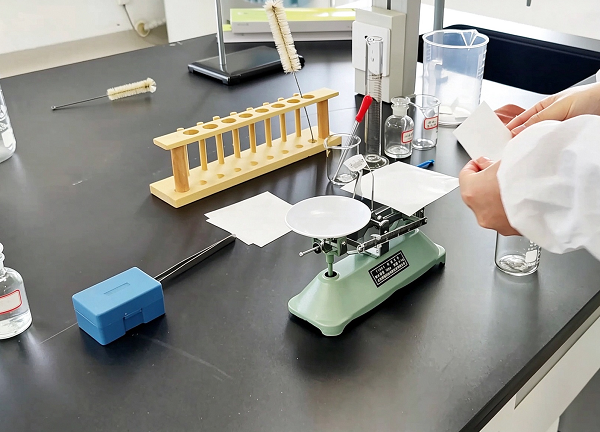
Physical stability is essential for a commercial pesticide. A product that separates during storage may be difficult to measure, pour, dilute, or apply consistently.
Sedimentation can occur when insoluble particles settle to the bottom. Phase separation may occur when emulsion droplets merge or when the formulation components become incompatible. These problems can result from particle size, density differences, inadequate emulsification, or changes during storage.
To reduce these risks, you can evaluate suitable dispersants, emulsifier combinations, and viscosity modifiers. Each adjustment should be tested because increasing viscosity, for example, may improve suspension stability but make pouring and spraying more difficult.
A practical quality-control program should include:
- Visual inspection for sediment, layers, and color changes.
- Redispersibility checks after storage.
- Dilution and sprayability tests.
- Viscosity and pH measurements.
- Storage studies under defined conditions.
- Chemical marker analysis to detect active-compound loss.
Accelerated studies can help identify potential weaknesses, but they do not automatically establish a commercial shelf life. Real-time stability data remain important for confirming the proposed storage period.
Combining Stemona Extract with Other Botanical Active Ingredients for Synergistic Effects
Combining Stemona extract with complementary biological active ingredients creates powerful multi-target pesticides, improves knock-down speed, and lowers active dose requirements.
Promising synergistic combinations include:
- Stemona + Neem Extract (Azadirachtin): Combines the rapid contact neurotoxicity and antifeedant action of Stemona with the Insect Growth Regulator (IGR) effects of Azadirachtin to disrupt pest lifecycle development.
- Stemona + Pyrethrins: Provides immediate pest knockdown while Stemona delivers long-lasting anti-feeding deterrence and residual control.
- Stemona + Peppermint: Essential oils disrupt insect cell membranes, allowing deeper penetration of Stemona alkaloids into the cuticle and enhancing overall mortality.
Troubleshooting & Scalability: Practical Guidelines for Commercial Formulators
A formulation that works in a laboratory may behave differently during commercial production. Changes in mixing equipment, batch size, shear conditions, raw-material lots, and processing temperature can affect product quality.
Common problems should be investigated systematically:
| Formulation problem | Possible cause | Recommended check |
|---|---|---|
| Precipitation after dilution | Poor solvent compatibility | Test dilution behavior and solvent ratios |
| Rapid phase separation | Unsuitable emulsifier system | Compare surfactant combinations |
| Excessive sediment | Poor suspension stability | Evaluate particle size and dispersants |
| Color or marker changes | Chemical degradation | Review storage conditions and analytical data |
| Batch-to-batch variation | Inconsistent raw material | Strengthen incoming-material specifications |
Before scaling up, establish a controlled manufacturing procedure covering raw-material checks, ingredient addition, mixing order, temperature, mixing time, and final quality tests. Conduct pilot batches to confirm that the process remains reproducible at a larger scale.
For B2B buyers, reliable raw-material specifications and technical documentation are essential. Suppliers should be able to provide relevant information on botanical identity, extraction methods, quality-control parameters, storage recommendations, and available analytical data.
Scale Up Your Botanical Pesticides Formulations with Bulk Stemona extract Ingredient
Successful Stemona pesticide formulation depends on more than choosing an active botanical ingredient. Solvent compatibility, emulsifier selection, chemical stability, physical shelf life, and biological performance must work together.
Looking for a reliable Stemona extract powder supplier for your botanical pesticide development?
Contact our team to discuss raw-material specifications, quality-control requirements, and potential applications. We can help you identify the information needed to evaluate ingredient compatibility and support your next formulation development project.
References
1. Tang, C. P., Chen, T., Velten, R., Jeschke, P., Ebbinghaus-Kintscher, U., Geibel, S., & Ye, Y. (2008). “Alkaloids from Stems and Leaves of Stemona japonica and Their Insecticidal Activities.” Journal of Natural Products, 71(1), 112–116.
2. Greger, H. (2006). “Structural Relationships, Distribution and Biological Activities of Stemona Alkaloids.” Planta Medica, 72(2), 99–113.
3. Kongkiatpaiboon, S., Mikulicic, S., Keeratinijakal, V., Greger, H., & Gritsanapan, W. (2013). “HPLC Simultaneous Analysis for Quality Assessment of Stemona curtisii Roots and Determination of Their Insecticidal Activities.” Industrial Crops and Products, 43, 648–653.
4. de Oliveira, J. L., Ramos Campos, E. V., & Fraceto, L. F. (2018). “Recent Developments and Challenges for Nanoscale Formulation of Botanical Pesticides for Use in Sustainable Agriculture.” Journal of Agricultural and Food Chemistry, 66(34), 8898–8913.