Sophora flavescens Extract for Sea Lice Control in Atlantic Salmon Aquaculture
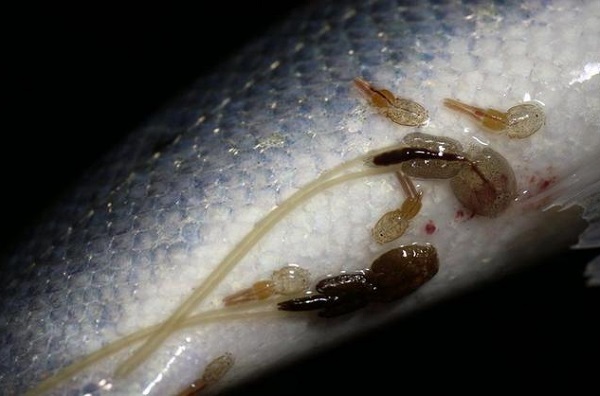
Sea lice remain a major challenge for the global salmon aquaculture industry. These external parasites can damage fish skin, affect growth, increase stress, and create additional production costs. In Chile, Caligus rogercresseyi is one of the most important sea lice species affecting Atlantic salmon.
As salmon producers seek new parasite management strategies, plant-derived ingredients are receiving increased research attention. Sophora flavescens extract-Matrine, is one botanical ingredient worth evaluating for aquaculture applications.
This article reviews the scientific background, research opportunities, formulation considerations, and quality requirements for developing matrine-based phytogenic feed additives for salmon aquaculture.
Caligus rogercresseyi: A Major Sea Lice Challenge in Salmon Farming
Caligus rogercresseyi is a parasitic copepod commonly known as a sea louse. It is a major parasite affecting farmed Atlantic salmon and rainbow trout in Chile.
Sea lice attach to the fish’s external surfaces and feed on mucus, skin, and other tissues. Their activity can cause skin damage and reduce the fish’s natural protective barrier.
Infestations may contribute to several production challenges:
- Skin lesions and tissue damage
- Stress and changes in feeding behavior
- Reduced growth and feed conversion performance
- Increased risk of secondary infections
- Additional treatment and farm management costs
Sea lice management can involve chemical treatments, mechanical removal, biological approaches, and preventive measures.
However, the effectiveness of control measures is influenced by the biological characteristics of the parasites, environmental conditions within the aquaculture setting, and management practices. As parasites have developed resistance, the efficacy of chemical-intensive delousing strategies—including those relying on organophosphates and synthetic pyrethroids—has diminished over time. Furthermore, the release of chemical substances during bath treatments poses ecological risks to the surrounding marine ecosystem. Consequently, the aquaculture industry is increasingly turning toward the use of naturally derived feed additives to manage parasite infestations.
What Is Sophora flavescens? Key Botanical Bioactives
Sophora flavescens, also known as Kushen, is a perennial plant in the Fabaceae family. Its roots contain several groups of naturally occurring compounds, including alkaloids and flavonoids.
Matrine is among its best-known alkaloids. Other compounds, including sophoridine and various flavonoids.
How Does Matrine Show Potential for Sea Lice Control in Atlantic Salmon?
Matrine has attracted interest because of its reported biological activity against several organisms. Some published studies have investigated its antiparasitic effects in aquatic animal systems.
For example, research on matrine and oxymatrine examined their activity against Cryptocaryon irritans, a parasitic protozoan affecting marine fish. The study reported activity in laboratory tests and effects in infected red sea bream receiving matrine-treated feed.
This research provides a scientific basis for further investigation of matrine in aquaculture. However, Cryptocaryon irritans is biologically different from Caligus rogercresseyi.
The two parasites differ in classification, life cycle, host interaction, and biology. Results against one parasite cannot be used to confirm efficacy against another.
Evaluating Sophora flavescens Extract in Sea Lice Bioassays
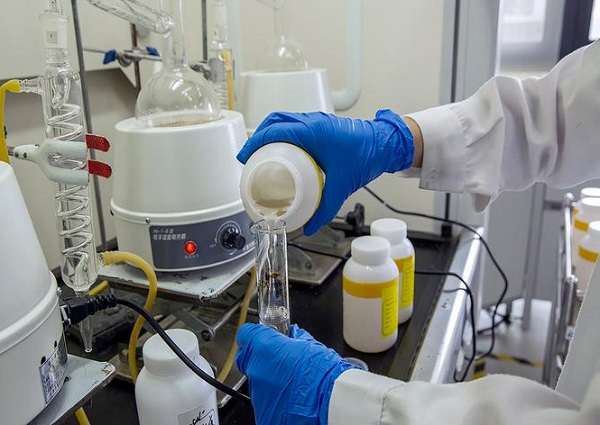
A well-designed bioassay is an important step in evaluating Sophora flavescens extract for sea lice management. The testing program should examine both parasite response and potential effects on the host fish.
A staged research approach can help you identify promising concentrations before larger trials begin.
1. Laboratory screening
Initial tests can assess the response of relevant sea lice stages to different concentrations of the extract or standardized matrine. Researchers should include untreated controls and suitable reference treatments where appropriate.
2. Concentration-response evaluation
Testing multiple concentrations can help identify response patterns and estimate effective concentration ranges. Results should include appropriate measures of variability and statistical confidence.
3. Host compatibility testing
Parallel testing should evaluate potential effects on Atlantic salmon. This helps determine whether concentrations showing parasite activity are compatible with fish health.
4. Controlled feeding and challenge trials
If laboratory results support further investigation, researchers may evaluate formulated diets under controlled conditions. A 90-day study can provide information on repeated dietary exposure, fish performance, and parasite outcomes.
Key endpoints may include:
| Evaluation area | Suggested measurements |
|---|---|
| Parasite response | Lice counts, developmental stages, attachment rates |
| Fish health | Survival, behavior, clinical observations |
| Growth performance | Weight gain, specific growth rate |
| Feed utilization | Feed intake, feed conversion ratio |
| Product performance | Matrine concentration and recovery in feed |
| Study quality | Control groups, replication, statistical analysis |
Environmental Safety and Ecotoxicological Profile
Unlike synthetic chemical bath treatments that disperse active compounds directly into the marine environment, oral phytogenic feed additives offer a localized, controlled delivery mechanism:
-
Biodegradability: Matrine is a natural alkaloid that undergoes rapid biological degradation when exposed to sunlight and marine microorganisms, preventing long-term accumulation in marine sediments.
-
Low Ecotoxicity to Non-Target Species: Ecotoxicological assessments indicate that Matrine exhibits minimal toxicity toward non-target marine organisms, such as wild benthic crustaceans, pelagic plankton, and microalgae, compared to conventional organophosphates.
-
Zero Accumulative Chemical Burden: Natural botanical compounds metabolize efficiently without generating persistent halogenated byproducts, helping marine salmon farms meet stringent environmental compliance standards.
Impact on Fish Welfare and Growth Metrics in Atlantic Salmon
Ensuring that antiparasitic additives do not suppress appetite or impair metabolic growth is critical for commercial adoption:
-
Palatability and Feed Intake: High-purity 98% Matrine requires very low inclusion rates, preventing feed rejection linked to the bitter taste of crude botanical extracts.
-
Gut Health & Histology: In-feed Matrine supports gut mucosa integrity without inducing enteritis or microvilli erosion in the distal intestine.
-
Growth Metrics: Atlantic Salmon fed optimized doses of Sophora flavescens extract maintain stable Specific Growth Rates (SGR) and optimal Feed Conversion Ratios (FCR).
-
Stress Reduction: By avoiding stressful handling associated with mechanical or thermal delousing operations, fish experience lower cortisol levels and retain stronger endogenous immune defenses.
Formulation Considerations for Matrine-Based Phytogenic Feed Additives
Taking 98% matrine as an example, its incorporation into a commercial aquaculture feed matrix requires a precise formulation strategy:
-
Target Dosage: Due to the 98% active ingredient concentration, precise premixing with carriers (such as wheat middlings or rice bran) is essential to ensure uniform distribution throughout batch mixers.
-
Bioavailability Enhancers: Combining Matrine with natural lipid carriers or organic acids can improve intestinal absorption, maximizing systemic circulation to skin tissue and surface mucus.
-
Synergistic Blends: Formulating Matrine alongside complementary botanical extracts (such as garlic-derived allicin or essential oils) can activate multiple antiparasitic pathways simultaneously, further reducing the risk of parasite resistance.
Feed Extrusion and Processing: Stability of Matrine in Aquaculture Feed
Extrusion is widely used in the production of commercial aquaculture feed. The process involves heat, moisture, pressure, and mechanical shear, which can affect ingredient stability.
Extrusion cooking in modern aquafeed mills subjects raw ingredients to high temperatures, high pressure, and moisture. Ensuring the thermal stability of active compounds is critical to commercial viability:
-
Thermal Stability: Standard Matrine exhibits high heat resistance, retaining structural integrity through standard twin-screw extrusion parameters.
-
Application Points:
-
In-Feed Mix (Pre-Extrusion): Added directly during dry mixing. Matrine’s heat tolerance minimizes active degradation during thermal conditioning.
-
Post-Extrusion Vacuum Coating (PEVC): For operations seeking maximum active preservation, Matrine can be dissolved in fish oil or lipid matrices and applied to cooled pellets via vacuum coater systems.
-
-
Physical Pellet Integrity: Incorporating 98% Matrine extract at low inclusion levels does not alter starch gelatinization, pellet durability index (PDI), or water stability parameters.
Source Sophora flavescens Extract for Your Aquaculture R&D and Formulation
As sea lice management transitions toward eco-friendly phytogenic solutions, sourcing high-purity, standardized raw materials is essential for dependable bioassay outcomes and commercial production scale-up.
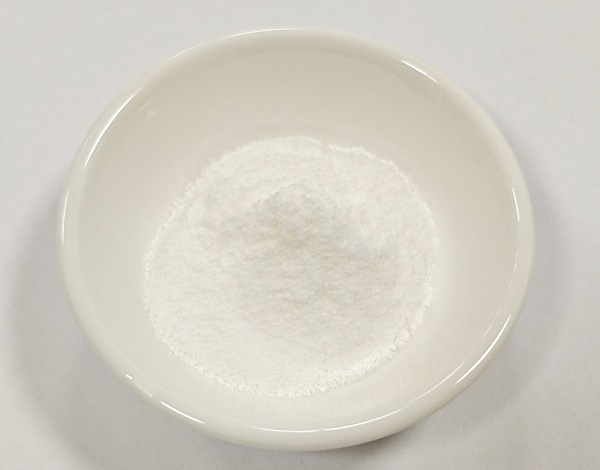
Green Agri is a Botanical Feed Ingredients Manufacturer, we are dedicated to providing natural solutions for the global livestock and aquaculture industry. We supply Sophora flavescens extract in bulk(matrine 98%)—presented as a white powder and tested by HPLC. Technical documentation, including a Certificate of Analysis (COA), is available, and free samples can be provided upon request.
Contact our team to request an R&D sample, COA, and product specifications for your laboratory testing, feed formulation, and extrusion trials.
Note: Sophora flavescens extract is presented here as an ingredient under evaluation for aquaculture R&D. Its efficacy against Caligus rogercresseyi, safety in Atlantic salmon, environmental impact, and suitability for commercial feed use require application-specific testing and regulatory review.
References
1. Bravo, S., & Treasurer, J. (2023). The management of the sea lice in Chile: A review. Reviews in Aquaculture, 15(4), 1749–1764.
2. Mancilla-Schulz, J., Marín, S. L., & Molinet, C. (2019). Dynamics of Caligus rogercresseyi in farmed Atlantic salmon (Salmo salar) in southern Chile: Are we controlling sea lice? Journal of Fish Diseases, 42(3), 357–369.
3. Jeong, J., McEwan, G. F., Arriagada, G., Gallardo-Escárate, C., & Revie, C. W. (2022). Quantifying key parameters related to the life cycle of Caligus rogercresseyi. Journal of Fish Diseases, 45(1), 219–224.
4. He, X., Fang, J., Huang, L., Wang, J., & Huang, X. (2015). Sophora flavescens Ait.: Traditional usage, phytochemistry and pharmacology of an important traditional Chinese medicine. Journal of Ethnopharmacology, 172, 10–29.
5. Goto, T., Hirazawa, N., Takaishi, Y., & Kashiwada, Y. (2015). Antiparasitic effect of matrine and oxymatrine (quinolizidine alkaloids) on the ciliate Cryptocaryon irritans in the red sea bream Pagrus major. Aquaculture, 438, 29–34.