Matrine and Osthole for Fish Parasites: Applications, Solubility, and Formulation
The aquaculture industry is undergoing a quiet revolution. For decades, fish farmers relied heavily on synthetic chemicals and antibiotics to keep parasites at bay. While these traditional treatments worked, they brought harsh side effects: environmental runoff, chemical residues in fish meat, and aggressive parasite resistance.
Matrine and osthole are two plant-derived compounds attracting research interest.
For aquaculture product developers, choosing an active ingredient is only the beginning. Water solubility, stability, fish safety, and formulation performance can determine whether a promising compound becomes a practical product.
Why Natural Parasiticides are Gaining Ground in Modern Aquaculture?
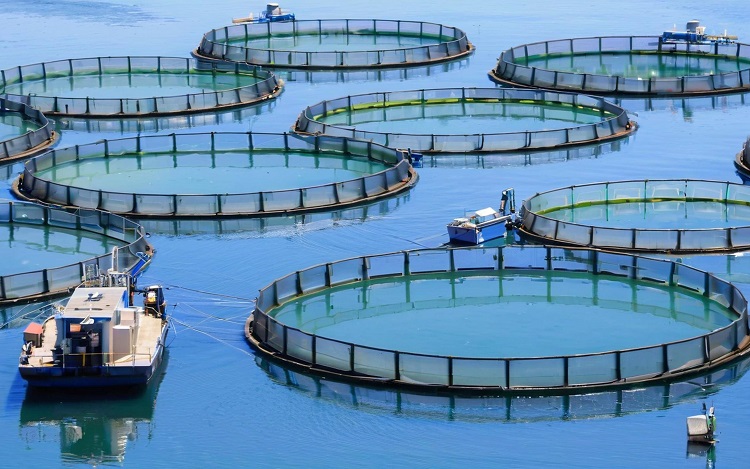
Fish parasites spread easily in intensive farming systems. High stocking density, frequent fish movement, and changing water conditions can increase infection pressure. Synthetic parasitides often face strict withdrawal periods, and repeated use builds resistant parasite populations that become increasingly hard to clear.
Botanical alternatives, often called natural parasiticides, offer a distinct advantage:
-
Multi-target action: Botanical extracts contain complex phytochemical structures, making it much harder for parasites to develop resistance.
-
Eco-friendly footprint: They break down rapidly in water and soil, drastically reducing toxic bioaccumulation in natural waterways.
-
Zero-residue appeal: Natural compounds support organic certification standards and help farms meet strict export compliance limits.
For commercial hatcheries and grow-out facilities, shifting to plant-derived solutions isn’t just about environmental stewardship—it is a strategic decision to ensure sustainable, long-term yield.
What Are Matrine and Osthole?
Matrine and osthole come from different botanical sources and belong to different chemical families.
Matrine is a quinolizidine alkaloid commonly associated with Sophora flavescens. Matrine is extracted from the roots of the plant Sophora flavescens; it is a broad-spectrum botanical insecticide and antifungal agent with a long history of use in agriculture.
Osthole is a natural coumarin found in plants such as Cnidium monnieri. Osthole is considered to possess antibacterial, antiparasitic, and anti-inflammatory properties.
The comparison between the two is as follows:
| Property | Matrine | Osthole |
|---|---|---|
| Chemical class | Quinolizidine alkaloid | Coumarin |
| Common botanical source | Sophora flavescens | Cnidium monnieri |
| Molecular formula | C15H24N2O | C15H16O3 |
| Molecular weight | 248.36 g/mol | 244.29 g/mol |
| Water solubility | More favorable than osthole | Poor |
| Aquaculture research | Published studies against certain ciliates | Limited direct fish-parasite evidence |
| Formulation focus | Concentration, pH, and stability | Solubilization and dispersion |
Matrine may be easier to incorporate into aqueous systems. Osthole generally requires greater attention to its delivery system.
How Do Matrine and Osthole Work Against Fish Parasites?
Matrine has shown promising activity against certain aquatic parasites under experimental conditions.
A study published in Aquaculture investigated matrine and oxymatrine against Cryptocaryon irritans, a marine ciliate parasite.
Researchers observed that both compounds stopped movement in the parasite’s free-swimming stage during laboratory testing. Dietary matrine also reduced infection levels in experimentally challenged red sea bream.
These findings suggest that matrine deserves further investigation as an aquaculture antiparasitic ingredient.
Osthole has demonstrated antiparasitic activity in broader biological research. However, its specific mechanisms and effectiveness against common fish parasites remain insufficiently established.
Possible research targets include parasite movement, cellular function, and survival. These mechanisms must be confirmed for each parasite species.
Mechanism of action
-
Nervous System Paralysis: Matrine interferes with the central nervous system of parasites by inhibiting key neurotransmitters (such as GABA receptors). This impairs the parasite’s neuromuscular function, causing immediate paralysis.
-
Cell Membrane and Metabolic Disruption: Osthole attacks the parasite’s cellular membrane integrity, increasing permeability and causing essential intracellular components to leak out. Furthermore, it interferes with energy metabolism (ATP production), depriving the parasite of energy.
Applications Against Gyrodactylus, Dactylogyrus, and Protozoan Parasites
Different fish parasites require different control strategies. Their locations, life cycles, and sensitivity to active compounds vary considerably.
Gyrodactylus: Skin and Fin Parasites
Gyrodactylus species are monogenean flatworms that commonly attach to fish skin and fins. Heavy infections may cause tissue damage, irritation, and reduced fish performance.
Dactylogyrus: Gill Parasites
Dactylogyrus species primarily infect fish gills. Severe infections can damage gill tissue and interfere with normal respiration. These parasites present additional formulation challenges because the active ingredient must reach the target without harming sensitive gill surfaces. Laboratory efficacy and fish tolerance should therefore be evaluated together.
Protozoan Parasites
Protozoan and other single-celled parasites include Cryptocaryon irritans, Ichthyophthirius multifiliis, and Trichodina species. Among these targets, matrine has particularly relevant published evidence against Cryptocaryon irritans.
Applications
| Parasite Type | Common Target Species | Primary Clinical Symptoms | Matrine & Osthole Impact |
| Monogenean Flukes (Gyrodactylus, Dactylogyrus) | Carp, Tilapia, Catfish, Salmon | Excessive mucus production, clamped fins, severe gill damage, respiratory distress | Paralyzes parasite attachment hooks (haptors), causing rapid detachment from fish skin and gills. |
| Protozoan Parasites (Ichthyophthirius multifiliis, Cryptocaryon) | Freshwater and Marine Finfish | “White spot disease,” flashing, lethargy, secondary bacterial infections | Disrupts the swimming theront stage in open water, preventing re-infection cycles. |
Water Solubility, Stability, and Formulation Challenges
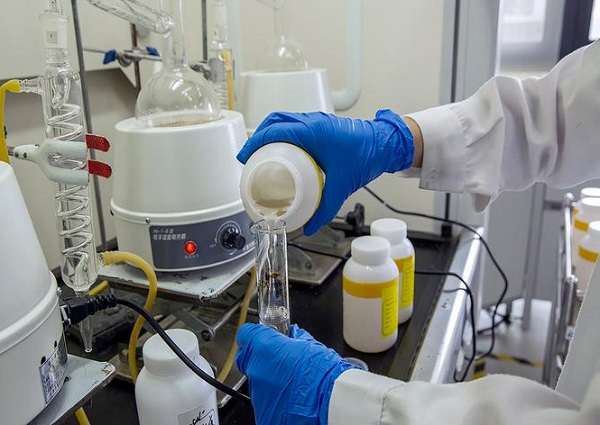
Water solubility is one of the most important considerations when developing botanical aquaculture products. An active compound must remain sufficiently available in the treatment system to reach its intended target. Matrine has more favorable aqueous solubility than osthole. Its actual performance still depends on purity, pH, temperature, and other formulation ingredients. Osthole presents a greater challenge because of its low water solubility. Poor dissolution may cause precipitation, uneven distribution, or inconsistent exposure.
Three technical factors deserve particular attention:
-
Solubility: Can the active ingredient reach the required concentration?
-
Stability: Does the formulation remain consistent during storage and use?
-
Compatibility: Will water hardness, salinity, or other ingredients affect performance?
A clear solution is not necessarily a better product. The dissolved active ingredient must also remain stable, biologically available, and safe for fish.
This distinction is often overlooked during early product development.
While the biological efficacy of Matrine and Osthole is undisputed, bringing them into practical commercial use presents significant chemical hurdles for formulators:
-
Lipophilic Nature (Poor Water Solubility): Because aquaculture treatments are typically delivered via bath immersion or pond spraying, insoluble raw powder simply floats on the surface or drops to the bottom sediment without treating the fish.
-
Hydrolysis and Oxidation: In raw liquid forms, active alkaloids and coumarins can degrade rapidly when exposed to sunlight, oxygen, or unstable water pH levels, leading to a loss of potency over short storage periods.
-
Bioavailability Limitations: If the active molecules cannot be evenly distributed in micro-droplet form throughout the water column, fish gills cannot absorb the therapeutic dose efficiently.
Developing Water-Soluble Matrine and Osthole Formulations for Aquaculture
Developing a practical aquaculture formulation requires more than mixing botanical extracts with water.
The first step is choosing a suitable delivery system based on the active ingredient and intended application.
Potential Formulation Approaches
Water-soluble concentrates: Matrine may be suitable for aqueous concentrates when its concentration and chemical stability are properly controlled.
- Emulsifiable concentrates: Osthole may require a compatible solvent and emulsifier system to achieve uniform distribution after dilution.
- Microemulsions: These systems may improve the dispersion of poorly soluble compounds. Their stability and compatibility with aquatic organisms require testing.
- Encapsulation systems: Encapsulation may help protect active ingredients and control their release. The benefits depend on the materials and formulation design.
For commercial development, manufacturers should test dilution stability, active ingredient recovery, and performance under different water conditions.
Combining matrine and osthole is another possible research direction. However, compatibility, combined toxicity, and any claimed synergy must be demonstrated experimentally.
The best formulation is not always the one with the highest active ingredient concentration. It is the one that delivers consistent performance within an acceptable safety margin.
Safety, Toxicity, and Environmental Considerations in Aquaculture Applications
Safety margins are critical when designing any aquatic treatment. Because fish share physiological pathways with marine invertebrates, dosage control is paramount.
Before commercial use, aquaculture developers should consider several testing areas.
-
Fish tolerance: Evaluate survival, behavior, gill condition, and other health indicators.
-
Aquatic toxicity: Assess potential effects on non-target organisms.
-
Environmental behavior: Examine degradation, persistence, and possible accumulation.
-
Residue safety: Consider residue studies and withdrawal requirements for food-producing fish.
-
Regulatory compliance: Confirm whether the proposed use requires veterinary drug or pesticide authorization.
Choose a Reliable Bulk Matrine and Osthole Manufacturer
Reliable raw materials are essential for developing consistent botanical aquaculture products. For B2B buyers, price alone should not determine supplier selection. Ingredient identity, purity, batch consistency, and technical documentation are equally important.
Why Work with Green Agri?
Green Agri is a botanical pesticide materials manufacturer with over 20 years of production experience. We are dedicated to providing natural solutions for global crop and animal protection.
We supply the following in bulk:
Matrine (liquid: 1%–10%; powder: 98%), HPLC-tested, extracted from the dried roots of Sophora flavescens (a legume).
Osthole (liquid: 10%; powder: 98%), HPLC-tested, extracted from the dried, mature fruits of Cnidium monnieri (an umbellifer).
We provide comprehensive technical documentation, including Certificates of Analysis (COA), Certificates of Origin, production flowcharts, and product specification sheets.
Are you developing plant-based products for the aquaculture industry to target Dactylogyrus (gill flukes), other helminths, or protozoan parasites?
Please contact us to discuss your procurement needs for Matrine and Osthole. Kindly let us know your target parasites, required purity, preferred formulation type, and expectations regarding water solubility.
References
1. Goto, T., Hirazawa, N., Takaishi, Y., & Kashiwada, Y. (2015). Antiparasitic effect of matrine and oxymatrine (quinolizidine alkaloids) on the ciliate Cryptocaryon irritans in the red sea bream Pagrus major. Aquaculture, 437, 339–343.
2. Buchmann, K. (2022). Control of parasitic diseases in aquaculture. Parasitology, 149(14), 1985–1997.
3. Madsen, H., & Stauffer, J. R., Jr. (2024). Aquaculture of animal species: Their eukaryotic parasites and the control of parasitic infections. Biology, 13(1), 41.
4. Sun, M., Sun, M., & Zhang, J. (2021). Osthole: An overview of its sources, biological activities, and modification development. Medicinal Chemistry Research, 30(10), 1767–1794.
5. Ren, Z., Lv, M., & Xu, H. (2022). Osthole: Synthesis, structural modifications, and biological properties. Mini-Reviews in Medicinal Chemistry, 22(16), 2124–2137.
6. Guo, F. C., & Woo, P. T. K. (2009). Selected parasitosis in cultured and wild fish. Veterinary Parasitology, 163(3), 207–216.