
How Tea Saponin Improves Soil Health in Modern Agriculture
Tea Saponin plays a growing role in modern farming systems focused on soil recovery, biological balance, and sustainable crop production. Tea Saponin often appears in searches such as soil health improvement, natural soil conditioner, and bio-based agricultural surfactant. Many fertilizer manufacturers look for solutions that support soil microbial activity while reducing dependency on harsh chemical inputs.
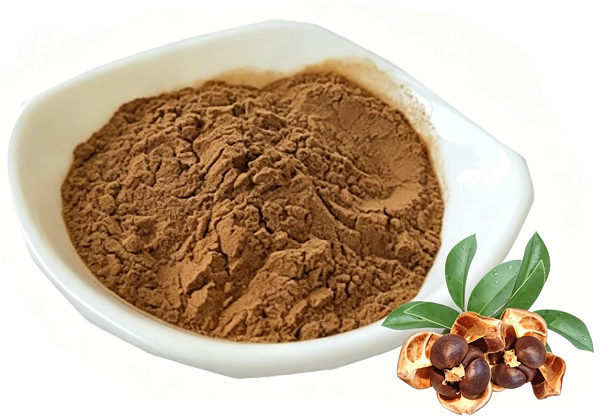
Green Agri, a botanical pesticide materials manufacturer with 20 years of experience, we supply tea saponin powder 60%, 85%, and 90% specifications for agricultural applications.
What Is Tea Saponin and Why Is It Used in Agriculture?
Tea Saponin is a natural compound extracted from Camellia plant seeds. It belongs to a group of plant glycosides with surface-active properties. Many agricultural users search for terms like natural surfactant for soil, plant-based soil enhancer, and biodegradable agricultural agent.
Farmers and agronomists use it in soil systems because it:
- Improves water distribution in compact soil
- Supports natural decomposition processes
- Enhances interaction between organic matter and soil particles
- Helps regulate microbial balance in the rhizosphere
Research in agricultural chemistry literature shows saponins can influence membrane permeability in microorganisms and soil fauna activity. This effect contributes to changes in microbial population dynamics, which is important for soil regeneration systems.
Understanding Soil Health in Modern Farming
Soil health in modern agriculture goes beyond nutrient content. It includes biological activity, organic matter cycling, and structural stability.
Healthy soil generally includes:
- Balanced microbial communities
- Stable aggregate structure
- Efficient nutrient cycling
- Strong water retention capacity
Intensive farming practices, chemical fertilizer overuse, and soil compaction often disrupt this balance. Many agricultural systems now shift toward bio-based inputs to restore soil function instead of only increasing nutrient dosage.
Tea Saponin fits into this trend as a functional soil-supporting material rather than a direct fertilizer replacement.
How Tea Saponin Enhances Soil Structure and Fertility
Soil structure refers to how soil particles bind together. Poor structure reduces aeration and water movement.
Tea Saponin supports soil structure through surface activity. It reduces surface tension between water and soil particles. This improves:
- Water penetration in compact soil layers
- Distribution of moisture in dry zones
- Interaction between organic matter and mineral surfaces
Improved moisture balance helps soil particles aggregate more effectively. This creates a more stable environment for root growth and nutrient exchange.
Long-term use in agricultural systems is often associated with better soil friability and reduced crust formation after irrigation.
Tea Saponin’s Role in Improving Soil Microbial Activity
Soil microbial activity is a key indicator of fertility.
Tea Saponin influences microbial ecosystems in a selective way. It does not act as a nutrient source. Instead, it modifies the soil environment.
Observed effects include:
- Increased activity of beneficial bacteria involved in organic decomposition
- Improved fungal-bacterial balance in the rhizosphere
- Enhanced breakdown of plant residues
Scientific studies on plant-derived saponins indicate their interaction with cell membranes of microorganisms. This interaction can shift microbial dominance patterns, supporting more balanced soil ecosystems under controlled application.
Can Tea Saponin Help Reduce Soil-Borne Pests and Diseases?
Tea Saponin is frequently studied for its bioactivity in soil ecosystems.
Its surface-active properties allow interaction with certain soil-dwelling organisms. This includes:
- Some insect larvae in soil environments
- Pathogen development stages in moist soil conditions
This does not replace targeted pest control methods. Instead, it contributes to integrated soil management systems where biological, physical, and chemical strategies work together.
In practical agricultural use, it is often integrated into eco-friendly crop protection programs rather than used as a standalone pesticide.
Tea Saponin as a Natural Solution for Sustainable Agriculture
Sustainable agriculture focuses on reducing chemical load while maintaining productivity.
Tea Saponin supports this direction because it:
- Originates from renewable plant resources
- Breaks down naturally in soil systems
- Reduces reliance on synthetic surfactants
- Fits integrated soil management strategies
Its role is especially relevant in regenerative agriculture systems that aim to rebuild soil biology over multiple seasons rather than short-term yield optimization.
How to Apply Tea Saponin for Better Soil Performance
Application methods depend on crop type, soil condition, and formulation strength. Tea Saponin powder is commonly available in 60%, 85%, and 90% concentrations.
Typical agricultural use includes:
- Dilution in irrigation systems for soil drench application
- Mixing into compost or organic fertilizer systems
- Integration into soil conditioning programs before planting
Higher concentration products are generally used in industrial or large-scale agricultural formulations, while lower concentrations are often applied in more sensitive crop systems.
Proper dosage control is important to maintain soil microbial balance and avoid unnecessary stress on beneficial organisms.
Challenges and Considerations When Using Tea Saponin in Soil Management
Although tea saponin offers soil benefits, practical use requires careful management.
Key considerations include:
- Soil type sensitivity, especially sandy vs clay soils
- Application concentration control
- Compatibility with microbial inoculants
- Irrigation timing and environmental conditions
Agricultural engineers often evaluate field conditions before integration into soil improvement programs. This ensures consistent performance and avoids disruption of existing biological systems.
Future Potential of Tea Saponin in Regenerative Agriculture
Regenerative agriculture continues to gain attention in global farming systems. Search trends like regenerative soil inputs and carbon farming soil biology reflect this shift.
Tea Saponin is being explored as:
- A supporting agent for microbial-driven soil recovery
- A natural surfactant in carbon-rich soil systems
- A component in bio-based soil restoration products
Its compatibility with organic and low-chemical farming systems makes it a promising material in future soil management strategies focused on long-term ecosystem health.
If you are looking for a stable and consistent supply of tea saponin for agricultural formulation, Green Agri provides tea saponin powder 60%, 85%, and 90% tailored for different application needs.
You can contact us for:
Bulk supply inquiry
Technical specification support
Sample testing and COA
We support global buyers in agricultural manufacturing, soil amendment development, and eco-friendly crop protection solutions. Contact us now!
Reference
Cheeke, P. R. “Saponins: Properties, Applications, and Biological Effects.”
Hostettmann, K., & Marston, A. “Saponins: Chemistry and Pharmacology of Natural Products.”
Oleszek, W. “Plant Saponins in Agriculture and Food Science.”
Francis, G., et al. “The Biological Action of Saponins in Animal and Plant Systems.”
Makkar, H. P. S. “Saponins in Forage Plants and Their Effects on Soil and Rumen Microbes.”
Price, K. R., & Johnson, I. T. “The Chemistry and Biological Activity of Saponins in Plants.”
Also See
Tea Saponin for Snail Control: Natural Solutions for Rice Farming
Is Tea Saponin Safe for Fish and Shrimp in Aquaculture?
Bulk Tea Saponin Pesticide: Reliable Supplier Guide
Bulk Tea Saponin Powder: Supply for Fertilizers
Aquaculture Companies: How to Find Tea Saponin Suppliers
Tea Saponin 30% 60%: Aquaculture Use in Shrimp and Crab Farming
Botanical Pesticide – Tea Saponin