Haematococcus pluvialis Powder in Aquaculture: Market Demand and Technical Challenges
In recent years, the aquaculture industry has seen a growing demand for natural pigment sources, especially natural astaxanthin. As consumers increasingly focus on natural ingredients and sustainability, feed manufacturers are also reassessing the sources of carotenoids used in fish and shrimp feed. So, what are the market demands and technological challenges of Haematococcus pluvialis powder in aquaculture? This blog post will analyze these questions.
Growing Demand for Natural Astaxanthin in Aquafeed
Haematococcus pluvialis powder is widely recognized as one of the richest natural sources of astaxanthin. Astaxanthin is an antioxidant and also a carotenoid that gives many marine organisms their red color. As a key additive in aquaculture feed, its demand is steadily increasing.
This increased demand stems primarily from the following factors:
- Natural Pigment: Natural astaxanthin effectively imparts the necessary pigments to aquatic animals such as salmon, trout, and shrimp.
- Health: In addition to color enhancement, Haematococcus pluvialis can strengthen the immune system of aquatic animals, promote growth, improve survival rates, and maintain their overall health.
- Consumer Awareness: Consumers are increasingly inclined to choose natural seafood products free of synthetic additives.
- Labelling and Certification: Some market certifications often restrict or prohibit the use of synthetic ingredients, prompting the aquaculture industry to shift towards natural alternatives.
Global Market Trends in Microalgae-Based Feed Ingredients
The microalgae feed ingredient market is expanding rapidly, reflecting a broad global demand for sustainable and natural feed solutions. With fluctuations in fishmeal and fish oil supplies, the industry is exploring alternative ingredients with functional and nutritional value.
Microalgae such as Haematococcus pluvialis align with this trend because they can be cultivated in controlled systems and provide high-value compounds such as carotenoids. The continued growth in aquaculture production in the Asia-Pacific and Latin American markets further supports the demand for microalgae feed ingredients.
Application of Haematococcus pluvialis Powder
Haematococcus pluvialis powder is mainly added to aquatic feed as a natural source of astaxanthin. Its main applications include:
Its main applications in aquafeed include:
- Salmonids: It is widely used in feed for salmon and trout to achieve the characteristic pink flesh color and enhance fish health.
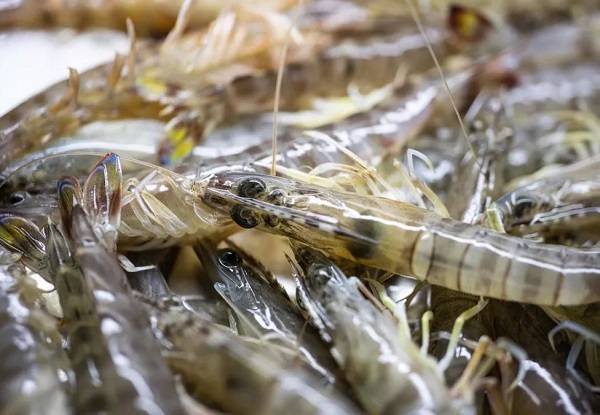
- Crustaceans: Shrimp and prawn farmers use it to improve growth, survival rates, and coloration, particularly during the larval and juvenile stages.
- Ornamental Fish: It is a popular additive in feed for aquarium fish to enhance their vibrant colors and overall vitality.
Cost Comparison: Natural vs. Synthetic Astaxanthin
A key point of discussion in aquatic feed formulation is the cost difference between natural and synthetic astaxanthin.
| Feature | Synthetic Astaxanthin | Natural Astaxanthin (Haematococcus Pluvialis) |
| Production Method | Chemical synthesis from petrochemicals | Microbial fermentation/cultivation |
| Purity | High (>95%) | Low |
| Stereoisomer Composition | Non-natural isomer mixture (mostly (3R, 3’S)-meso) | Primarily natural isomer (3S, 3’S) |
| Cost | Generally lower | Higher, but decreasing due to technological advancements |
| Bioavailability | Lower | Potentially higher due to presence of other nutrients |
| Market Perception | Perceived as artificial | Perceived as natural and premium |
Raw Material Supply and Cultivation Constraints
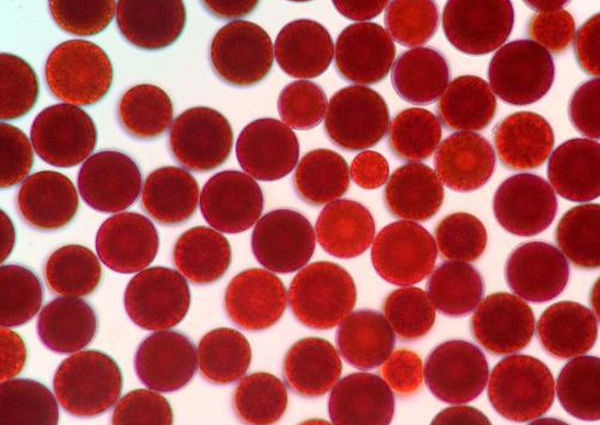
The cultivation of Haematococcus pluvialis requires specific environmental conditions, including controlled light and nutrient management to promote astaxanthin accumulation. Production is typically divided into two phases: the green vegetative growth phase and the red cystic growth phase.
Factors such as pollution risk, climate sensitivity, and production scale can affect supply stability. With increasing global demand, ensuring stable biomass yield and astaxanthin content remains an operational challenge for producers.
Astaxanthin Stability During Feed Processing
Astaxanthin is a fragile molecule susceptible to degradation by light, oxygen, high temperature, and moisture. Maintaining its integrity throughout the feed production process is crucial.
The main challenges in maintaining astaxanthin stability include:
- Heat Sensitivity: The high temperatures used in conditioning and extrusion steps during feed production can lead to significant astaxanthin loss.
- Oxidation: Exposure to oxygen, especially at high temperatures, can cause astaxanthin degradation.
- Grinding and Mixing: The mechanical forces involved in grinding and mixing can damage astaxanthin molecules or the cells containing astaxanthin, making them more susceptible to degradation.
- Particle Integrity: Poorly formed particles with poor physical stability can lead to astaxanthin leakage or degradation.
Challenges in Extrusion and Pelletizing Applications
Feed production processes, such as extrusion and pelleting, can impact the final quality of aquatic feeds. These processes also present challenges for adding Haematococcus pluvialis powder to feed:
- Temperature Control: Extruders operate under high temperature and pressure, which can lead to astaxanthin degradation. This necessitates precise temperature and time control.
- Shear Force: High shear forces in extruders can damage astaxanthin-containing cells, reducing their stability and bioavailability.
- Component Uniformity: Uniform distribution of microalgae powder within the feed matrix is crucial for ensuring pigment consistency and performance.
- Moisture Management: Optimal moisture content is essential for pellet formation and stability.
Quality Control Standards for Haematococcus pluvialis Powder
For aquafeed manufacturers, consistent pigmentation performance, processing stability, and safety compliance all depend on multiple quality parameters.
- Moisture Levels: Excessive moisture content can easily lead to mold growth.
- Heavy Metal Limits: Strict caps on Lead (Pb), Arsenic (As), and Mercury (Hg). Feeding animals with excessive levels of heavy metals over a long period can cause irreversible damage.
- Microbiological Safety: Testing for Salmonella, E. coli, and mold counts.
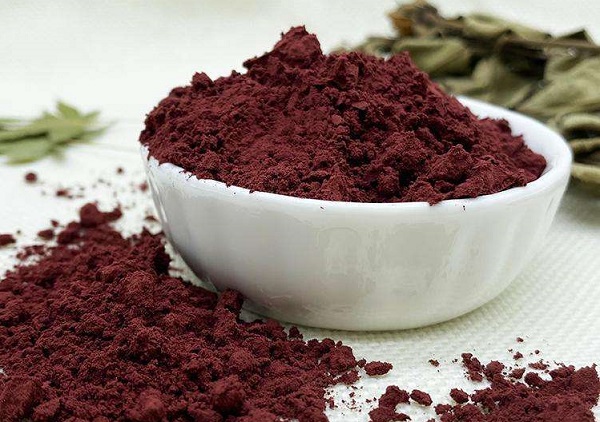
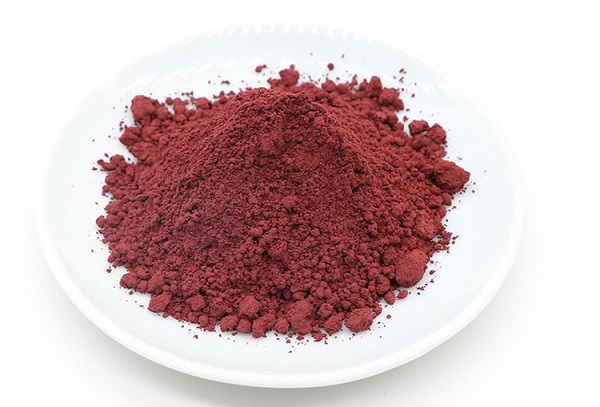
- Physical Characteristics and Particle Size: Uniform particle size supports homogeneous mixing in premixes and finished feed. Excessively coarse powder may cause segregation, while overly fine particles can increase oxidation risk. Color should appear deep red, indicating adequate astaxanthin accumulation during the red cyst phase.
- Safety and Compliance Indicators: A complete documentation package: COA, specification sheet, SDS, and, where applicable, third-party testing reports.
Where to Wholesale Haematococcus pluvialis Powder
Choosing a reliable bulk supplier is crucial for feed producers and aquaculture premix manufacturers.
Green Agri is a botanical feed ingredients manufacturer, supplying Haematococcus pluvialis powder specifically for feed and aquaculture applications. We use Haematococcus pluvialis grown in an advanced closed-loop photobioreactor environment. Our processing technology ensures a high cell breakage rate, maximizing bioavailability and providing good stability to withstand the compression during feed production.
We focus on standardized quality control procedures and support B2B clients such as feed mills, premix manufacturers, and distributors. Our team provides technical documentation and sample support to assist with formulation testing.
If you are looking for Haematococcus pluvialis powder for feed, Green Agri is a trustworthy choice. Contact us today for a quote!
Also See
Several Common Natural Antibiotics for Cats
Wholesale Supply Corn Cob Powder in Poultry Feed
Yucca Powder vs. Yucca Extract
Why Use Fructooligosaccharides (FOS) Ingredients In Pet Food
Lions Mane Powder or Extract Benefit for Animal Nutrition
Corn Cob Powder Formula Solution For Poultry Feed
Is Yeast Extract Safe for Dogs? Pet Supplement Manufacturers Guide
Reference
Boussiba, S. (2000). Carotenogenesis in the green alga Haematococcus pluvialis: Cellular physiology and stress response. Physiologia Plantarum, 108(2), 111–117.
Lorenz, R. T., & Cysewski, G. R. (2000). Commercial potential for Haematococcus microalgae as a natural source of astaxanthin. Trends in Biotechnology, 18(4), 160–167.
Shah, M. M. R., Liang, Y., Cheng, J. J., & Daroch, M. (2016). Astaxanthin-producing green microalga Haematococcus pluvialis: From single cell to high value commercial products. Frontiers in Plant Science, 7, 531.
Torrissen, O. J., Hardy, R. W., & Shearer, K. D. (1989). Pigmentation of salmonids—Carotenoid deposition and metabolism. Reviews in Aquatic Sciences, 1(2), 209–225.
Li, J., Zhu, D., Niu, J., Shen, S., & Wang, G. (2011). An economic assessment of astaxanthin production by large-scale cultivation of Haematococcus pluvialis. Biotechnology Advances, 29(6), 568–574.