Sodium Alginate in Animal Feed: Functions, Benefits and Formulation
Sodium alginate is a natural polysaccharide obtained from brown seaweed. Feed manufacturers use it as a functional ingredient in different animal feed formulations. Its thickening, binding and gelling properties make it useful when producers need to improve feed texture, stability and processing performance.
What Is Sodium Alginate?
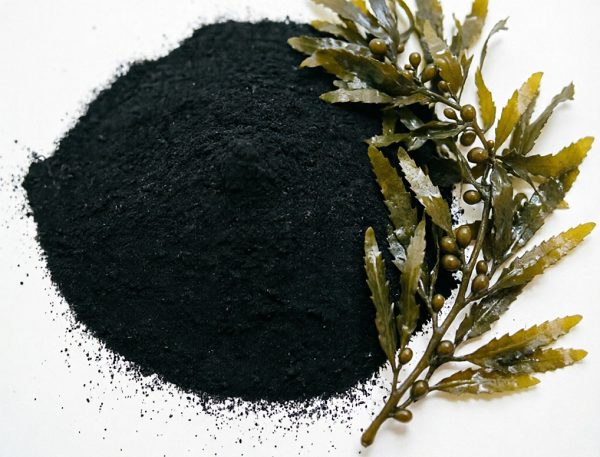
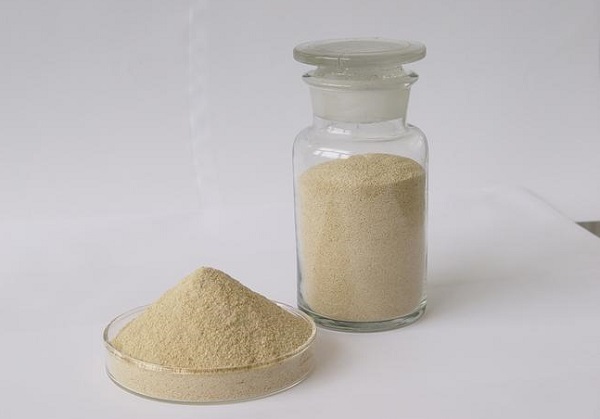
Sodium alginate is the sodium salt of alginic acid. It is extracted from brown seaweed, including species such as Ascophyllum nodosum, Laminaria and Macrocystis. Alginates naturally occur in seaweed cell walls and help maintain their structure. Sodium alginate is a water-soluble polymer. When added to water, it hydrates and forms a viscous solution.
In animal feed production, sodium alginate is mainly considered a functional ingredient. It can help adjust texture, improve binding and support the formation of certain feed structures.
Sodium alginate is derived from renewable marine resources; it is completely safe for livestock, poultry, and aquatic animals, and is easily digestible.
What Are the Main Functions of Sodium Alginate in Animal Feed?
Feed mills rely on sodium alginate to solve physical stability problems during pelleting and extrusion. Its primary roles include:
-
Thickening: It increases viscosity in water-based feed systems and liquid feed formulations.
-
Binding: It can help bind particles in certain feed products.
-
Stabilization: It may help reduce separation in suitable liquid or semi-liquid formulations.
-
Gelling: When exposed to calcium ions under suitable conditions, alginate can form a gel structure.
- Moisture Retention: Locks water into semi-moist pet foods and specialty livestock treats to maintain a soft, chewy texture.
How Does Sodium Alginate Work as a Thickener, Binder and Stabilizer?
Sodium alginate hydrates in water. Its polymer chains interact with water molecules, increasing the viscosity of the solution. This process helps create a thicker liquid or paste-like feed mixture. Its binding properties can help connect feed particles within certain formulations. This function may support the production of pellets, soft feed products or other structured feed materials.
Sodium alginate also interacts with calcium ions. Calcium can connect alginate chains and form a three-dimensional gel network. This process is called ionic crosslinking.
The gel structure can be useful in feed products that require controlled texture or shape.
What Are the Potential Benefits of Sodium Alginate in Animal Nutrition?
Beyond improving physical pellet quality, adding feed-grade sodium alginate supports animal health and farm profitability:
-
Reduced Feed Waste: Harder, more durable pellets mean fewer “fines” (dust) at the bottom of feed troughs, saving farmers money.
-
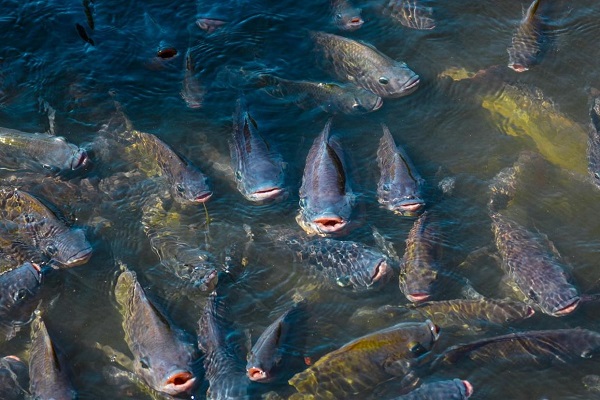
Cleaner Aquaculture Ponds: Because fish feed stays together underwater, unconsumed nutrients do not leach out and pollute the water with excess ammonia.
-
Digestive Health Support: As a soluble dietary fiber, sodium alginate slows down digestion slightly, helping animals absorb more nutrients and supporting healthy gut bacteria.
-
Toxin Binding: Research shows alginate fibers can bind certain heavy metals and mycotoxins in the digestive tract, helping animals pass them safely.
How Is Sodium Alginate Used in Different Animal Feed Formulations?
Sodium alginate can be used in different animal feed formulations based on the processing needs and physical properties of the finished product. Its thickening, binding and gelling properties may support feed production for aquaculture, poultry, pigs, ruminants and companion animals.
| Animal Feed Category | Potential Applications of Sodium Alginate |
| Aquaculture Feed | Used as a binder to support pellet integrity, reduce particle dispersion and improve feed structure in selected formulations. |
| Poultry and Pig Feed | May be used as a binder or texture-modifying ingredient in selected feed formulations. It can help improve particle cohesion and support the development of specialty feed products. |
| Ruminant Feed | May be explored as a binder or functional ingredient in certain liquid, semi-solid or specialty feed formulations. |
| Companion Animal Feed | Incorporated into wet canned pet foods as a natural gravy thickener and meat-chunk binder. |
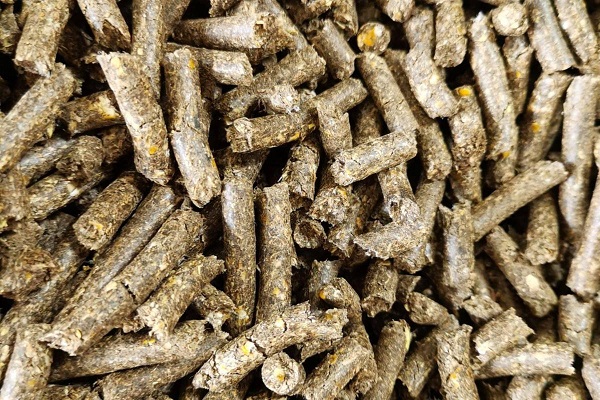
What Factors Affect the Performance of Sodium Alginate in Feed Production?
Even high-quality alginate will underperform if mill conditions are off. Watch these four variables:
-
Water Temperature and Hardness: Cold water slows down hydration, while hard water (high in calcium) can cause premature clumping before the powder fully dissolves.
-
pH Levels: Sodium alginate works best in neutral to slightly alkaline mixes (pH 6.0 to 8.5). Highly acidic ingredients (below pH 4.0) can cause the solution to precipitate.
-
Shear Mixing Speed: High-shear mixers disperse the powder quickly without forming “fish eyes” (dry powder lumps coated in gel).
-
M/G Ratio: Alginate contains mannuronic acid (M) and guluronic acid (G). High-G grades form rigid, brittle gels, while high-M grades create flexible, elastic gels.
Feed Grade Sodium Alginate: Key Specifications and Quality Requirements
Not all sodium alginate is suitable for livestock. Unlike agricultural fertilizer grades—which allow higher mineral impurities and wider viscosity swings—feed-grade material must meet strict safety rules. It also differs from veterinary drug grades, which require ultra-low endotoxin levels and pharmaceutical pharmacopeia testing.
When reviewing a Certificate of Analysis (CoA) for feed-grade sodium alginate, check these core metrics:
| Parameter | Standard Feed-Grade Target | Why It Matters |
| Purity (Assay) | ≥90.0% | Ensures consistent binding strength per ton of feed |
| Viscosity (1% solution) | 200 – 800 mPa·s (customizable) | Controls liquid thickness and extrusion flow |
| Moisture Content | ≤15.0% | Prevents mold growth during warehouse storage |
| pH (1% solution) | 6.0 – 8.0 | Keeps feed mixes chemically stable |
| Lead (Pb) / Arsenic (As) | ≤ 5.0 mg/kg , ≤ 2.0 mg/kg | Protects animal health and meets food-chain safety laws |
| Total Plate Count | ≤ 10,000 CFU/g | Prevents bacterial contamination in finished feed |
How to Choose a Reliable Feed Grade Sodium Alginate Supplier?
A reliable supplier should provide clear specifications and technical documentation. You should request a Certificate of Analysis (CoA), Technical Data Sheet (TDS) and Material Safety Data Sheet (MSDS or SDS).
Microbial limits and heavy metal results are also important when the product will be incorporated into animal feed.
Sample testing is a practical step before bulk purchasing. Feed manufacturers can evaluate viscosity, dispersion, compatibility and processing performance using their own formulation conditions.
When comparing suppliers, consider product consistency, batch documentation, packaging, MOQ, lead time and shipping options. These factors help support a long-term supply relationship.
Looking for feed-grade sodium alginate for animal feed production? Green Agri is a botanical feed ingredients manufacturer, we supply feed-grade sodium alginate powder in bulk.
Contact us to request product specifications, a CoA, microbial information, samples for evaluation, bulk pricing, MOQ and lead time. Our team can help you review the product information required for your feed formulation project.
FAQ About Sodium Alginate
Is alginic acid the same as sodium alginate?
No. Alginic acid is the acid form of alginate, while sodium alginate is its sodium salt. Their solubility and physical properties differ.
Is sodium alginate a polymer?
Yes. Sodium alginate is a natural polysaccharide polymer composed of linked mannuronic acid and guluronic acid units.
Is sodium alginate an enzyme?
No. Sodium alginate is a polysaccharide, not an enzyme. Enzymes are biological catalysts that help specific chemical reactions occur.
Is sodium alginate biodegradable?
Sodium alginate can be biodegraded by microorganisms under suitable environmental conditions. The rate depends on the environment and microbial activity.
References
-
EFSA Panel on Additives and Products or Substances Used in Animal Feed (FEEDAP). Safety and Efficacy of a Feed Additive Consisting of Sodium Alginate for All Animal Species (ALGAIA). EFSA Journal. 2022.
-
EFSA Panel on Additives and Products or Substances Used in Animal Feed (FEEDAP). Safety and Efficacy of Sodium and Potassium Alginate for Pets, Other Non-Food-Producing Animals and Fish. EFSA Journal. 2017.
-
FAO. The State of World Fisheries and Aquaculture. Food and Agriculture Organization of the United Nations.
-
Lee, K. Y., & Mooney, D. J. Alginate: Properties and Biomedical Applications. Progress in Polymer Science. 2012.
-
Draget, K. I., Skjåk-Bræk, G., & Smidsrød, O. Alginate-Based Materials: Properties and Applications. Advances in Polymer Science.
-
McHugh, D. J. Production, Properties and Uses of Alginates. FAO Fisheries Technical Paper.