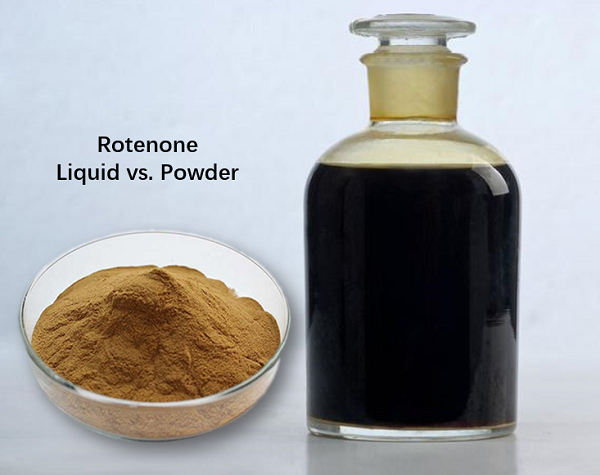
Rotenone Liquid vs. Powder: Which Form Is Better for Your Formulation?
Rotenone is a naturally occurring compound extracted from roots of plants like Derris and Lonchocarpus species. It has been used historically as a broad-spectrum insecticide and, in modern times, as a piscicide in fisheries management as well as for pest control in agriculture and aquaculture.
Rotenone products are commonly available in liquid and powder forms, both forms contain the same active molecule, but their handling, solubility, stability, and suitability for different end products vary significantly.
In this post, we’ll dive into the differences between liquid and powder rotenone, explore their strengths, limitations, and practical considerations, and help you decide which form might be best for your particular application.
Understanding Rotenone
Let’s first briefly understand what rotenone liquid and rotenone powder are.
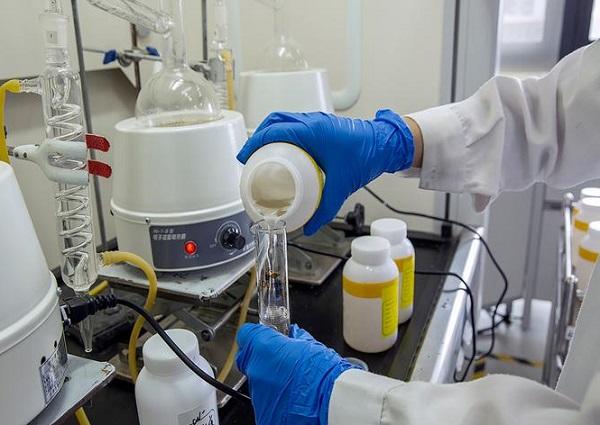
- Rotenone liquid: This is typically an emulsifiable concentrate or solution where rotenone is dissolved or suspended in a liquid carrier with emulsifiers. It’s usually packaged in jugs or drums.
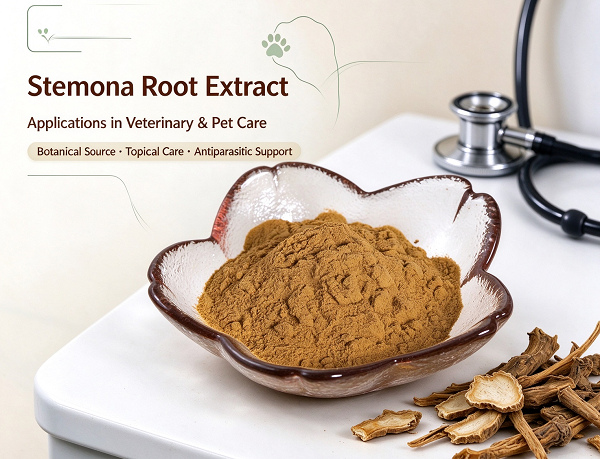
- Rotenone powder: This is a solid, crystalline form of the active ingredient. It may be sold as a dry powder or ground plant material containing rotenone, often requiring mixing with water or a carrier before application.
Each form must be handled, stored, and applied differently, and these differences directly influence usability, effectiveness, safety, and cost.
Application: Liquid vs. Powder Rotenone
| Application Aspect | Liquid Rotenone | Powder Rotenone |
|---|---|---|
| Formulation readiness | Supplied as solution or suspension; minimal further processing needed | Requires dissolving or dispersion before use |
| Suitability for finished products | Ideal for ready-to-use or easy-to-dilute formulations | Better suited for wettable powders, dusts, granules, or compound blends |
| Flexibility in formulation design | Limited flexibility once concentration is fixed | High flexibility; easy to adjust potency or combine with other actives |
| Ease of scaling production | Faster to scale for liquid-based product lines | Better for modular production and customized batches |
| End-user application | Simple dilution and spraying; fewer preparation steps | May require mixing protocols and user guidance |
1. Solubility & Ease of Use
- Powder: Rotenone is poorly soluble in water. To formulate, you must first dissolve it in a suitable organic solvent (e.g., acetone, xylene) before adding surfactants or diluents. This adds steps and requires solvent handling.
- Liquid: Significantly easier. The rotenone is already in solution with emulsifiers—just add to water with agitation. It’s designed for rapid, uniform dispersion, saving time and reducing mixing complexity.
2. Formulation Flexibility
- Powder: Offers maximum flexibility. You can create custom formulations—wettable powders, dusts, granules, or your own liquid concentrates—tailoring solvents and adjuvants to your specific needs.
- Liquid: You’re locked into an emulsifiable concentrate format. While excellent for spray applications, it’s not suitable if you’re developing dry products like powders or granules.
3. Stability & Shelf Life
- Powder: Generally has excellent long-term shelf stability when stored cool, dark, and dry. Degradation is minimal over years if sealed properly.
- Liquid: Can be prone to crystallization or “falling out” of solution if stored at low temperatures. Solvent evaporation or chemical degradation of emulsifiers can also occur over time. Requires strict storage protocols.
4. Handling & Safety
- Powder: Presents an inhalation hazard—dust particles can be toxic if breathed in. Requires proper PPE (respirator, gloves) and controlled environments during weighing and mixing.
- Liquid: Eliminates dust but introduces solvent vapor exposure and splash risks. Solvents are often flammable and have their own toxicity. Requires ventilation and chemical-resistant PPE.
Why Do Formulators Prefer Liquid Rotenone for Certain Products?
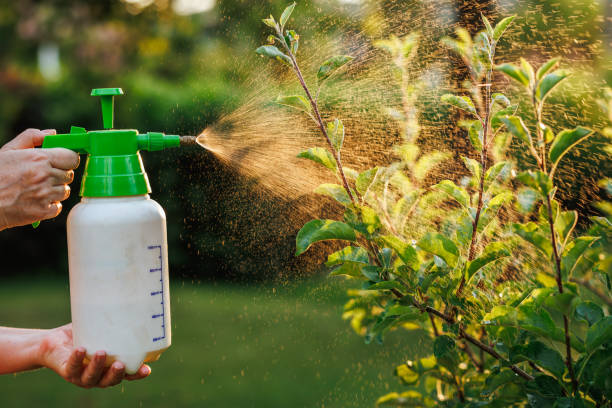
For supplying finished pesticide formulations, liquid rotenone offers clear advantages:
- Reduces formulation time and processing complexity
- Ensures consistent dispersion and application performance
- Aligns well with markets demanding convenience and efficiency
- Lowers the risk of incorrect mixing by end users
Liquid rotenone is particularly attractive to buyers serving large-scale agricultural operations or distributors focusing on standardized, high-turnover products.
Why Is Powder Rotenone Favored in Customized and Compound Formulations?
Powder rotenone is often preferred prioritize formulation control and versatility:
- Allows precise dosing during product development
- Integrates easily into multi-ingredient botanical pesticide blends
- Supports customized concentrations for different crops or pests
- Fits well with private-label and OEM production models
If you target niche markets, organic farming inputs, or region-specific pest challenges, powder rotenone provides greater application adaptability.
How Does Performance Compare in Real-World Pest Control?
In terms of biological efficacy, both liquid and powder rotenone can deliver comparable pest control performance when used correctly. The difference lies more in consistency and ease of achieving optimal results. Liquid rotenone tends to provide more uniform distribution on plant surfaces, which can enhance immediate knockdown effects and reduce the risk of under-dosing.
Powder rotenone performance depends heavily on proper dispersion. If not fully dissolved or evenly mixed, efficacy may vary between applications. That said, in good formulations, powder rotenone can perform just as effectively as liquid forms.
How Do Safety and Environmental Considerations Differ?
From an environmental standpoint, neither form is inherently safer than the other; responsible use, accurate dosing, and regulatory compliance matter far more than physical form. Choosing the right formulation can, however, help reduce waste and over-application, indirectly supporting more sustainable pest management practices.
Which is Better for You?
There is no universal “better” form—only the right form for your specific formulation goals.
For custom, dry, or solvent-controlled products: Powder is your foundational building block.
For ready-to-dilute sprays, especially aquatic treatments: Liquid rotenone is the efficient, industry-proven choice.
Always partner with a reputable supplier who can provide technical data sheets, purity reports, and handling guidelines for their specific powder or liquid product. And never compromise on safety—formulate responsibly.
Green Agri is a professional botanical pesticide materials manufacturer. We offer rotenone in liquid, powder, and block forms, with specifications customizable to your needs. We provide documents such as COA, specification sheets, SDS, and process flow charts, and also offer formulation and technical support. Ready to choose the right rotenone for your formulation? Contact us today!
Also See
Embrace Rotenone for a Sustainable Future
Wholesale Rotenone Powder 40% For Agriculture
Rotenone Powder For Sale: Aquaculture of Application & Dosage
Rotenone: A Solution for Aquaculture
What Is Rotenone Pesticide
How Does Rotenone Kill Fish
Rotenone: properties, Uses And Production Process